You built or bought a backyard shed, but by July, it feels like an oven out there. If you are planning to turn that outdoor space into a workshop, home office, or just a place to keep gear from melting in the Guadalupe County heat, you need to know what shed insulation actually costs.
Most homeowners around Seguin want straight numbers instead of a vague estimate. Here is how the math shakes out for a standard 12x16 outbuilding.
Typical Price Ranges for Shed Insulation
Your total investment depends heavily on the material you choose and whether you are doing the work yourself or hiring out. Over the years at Champion Insulation, we have seen how different materials perform against our local climate.
- Fiberglass Batts: $0.50 to $1.25 per square foot installed. Great for a tight budget, but they need a proper vapor barrier.
- Rigid Foam Boards: $1.00 to $2.25 per square foot. Excellent for DIYers retrofitting an existing building with 2x4 studs.
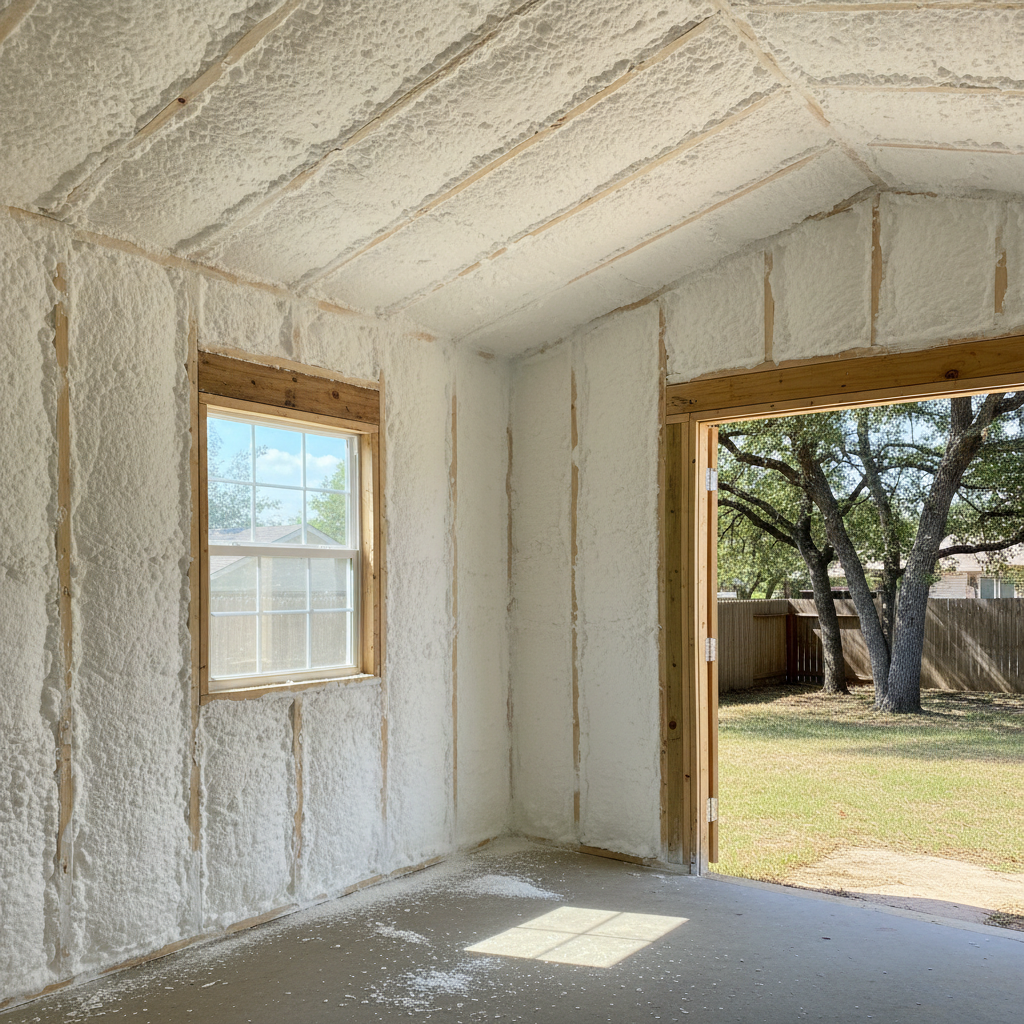
- Spray Foam: $2.00 to $4.50 per board foot for open-cell, and up to $6.00 for closed-cell. It costs the most upfront, but it stops air leaks dead in their tracks.
For a complete 12x16 shed, DIY fiberglass might run you around $400 to $700 in materials. Hiring a crew to spray foam the walls and ceiling usually lands between $1,500 and $3,000 depending on your exact roof pitch and framing.
What Drives the Cost Up or Down?
Not all sheds are built the same, and neither are the quotes you will get. Here are the main factors that move the needle:
Size and layout matter immensely. A simple gable roof with open studs is fast to insulate. If you have a complex loft, multiple small windows, or tricky framing, expect higher labor costs because of the extra detail work required.
Material selection is the other big driver. If you just store lawnmowers, basic fiberglass or radiant barriers will do. If you plan to run a window AC unit all summer, skipping cheap insulation to save a few bucks means your monthly electric bill will skyrocket.
What Should Be Included in a Professional Quote?
Never sign a contract that just lists a lump sum. A legitimate quote from a local contractor should spell out every detail clearly.
It needs to state the exact R-value being delivered, the square footage of the walls and ceiling, and the specific type of material. Cleanup, disposal of scraps, and vapor barrier installation must be explicitly written into the scope of work. If anyone tries to charge extra for basic site cleanup after the job is done, look elsewhere.
How to Avoid Overpaying
The easiest way to get taken advantage of is accepting the first bid that lands in your inbox. Get at least two or three quotes from reputable local pros who actually come out and look at your setup. Beware of contractors quoting prices drastically lower than everyone else—they usually cut corners on thickness or skip necessary vapor barriers, which leads to condensation and mold rot in our humid South Texas climate. Match the insulation quality to how you actually use the space, and you will get a comfortable shed without burning a hole in your wallet.