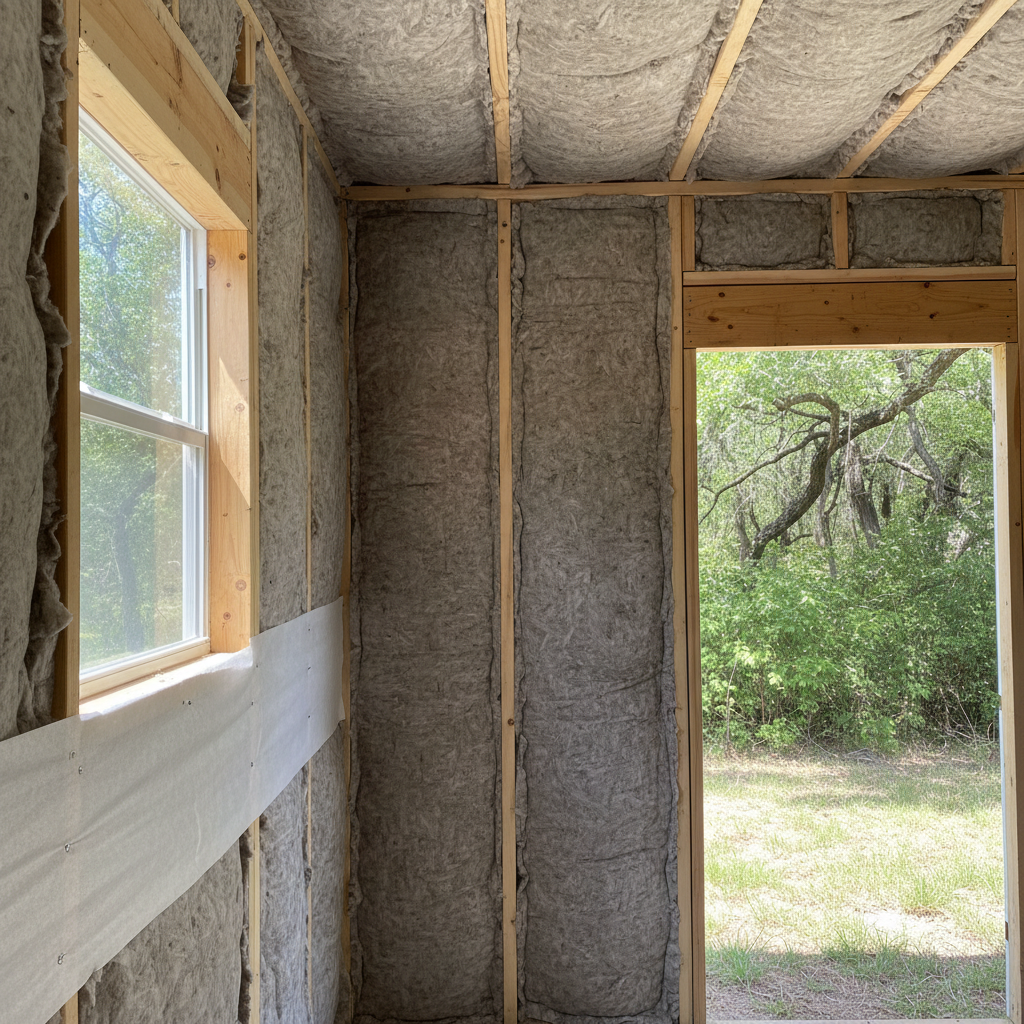
Stepping into a backyard shed in July in Seguin, TX often feels like opening an oven. Summer temperatures in Seguin regularly clear the mid-90s, pushing metal or wooden structures past the 120-degree mark. An uninsulated shed in Seguin functions as a storage locker for melted plastics and rusted tools. Turning that backyard box into a proper workshop, art studio, or safe storage area requires Shed Insulation. Champion Insulation outlines how to approach a Shed Insulation project, what homeowners can do themselves, and when it makes sense to bring in help from Champion Insulation.
Before You Start: Planning and Prep
Homeowners cannot simply place Insulation between the studs and stop there. The construction of the shed must be evaluated first. Standard wood-framed sheds in neighborhoods near McQueeney or out toward Lake Seguin use 2x4 framing. That framing limits the depth available for Insulation materials. Property owners also need to identify the intended use of the structure. Storage sheds for lawnmowers only require basic heat and airflow management. Workshops using a window unit or a small mini-split to combat humidity require a complete thermal envelope.
The exterior siding and roof must be checked for leaks before any Insulation is installed. Water intrusion causes Insulation to trap moisture, which leads to mold and wood rot that destroys framing. Sheds also require proper ventilation. Pairing Shed Insulation with soffit or gable vents keeps trapped humidity moving outward instead of condensing on the walls.
During the Project: DIY vs. Pro Work
Installing batt Insulation or rigid foam boards is a straightforward weekend project. Homeowners using utility knives, staple guns, and patience can cut fiberglass batts or foam boards to fit snugly between wall studs and ceiling rafters. The work involves handling itchy materials, but it reduces labor costs.
Professional help becomes necessary for complex projects. Sheds with awkward angles, vaulted ceilings, or projects requiring a complete air barrier to stop Texas heat benefit from spray foam. Closed-cell spray foam requires professional equipment, precise chemical mixing, and specialized protective gear. DIY spray foam kits from hardware stores frequently result in uneven application and higher overall costs compared to hiring Champion Insulation.
After Installation: Finishing and Airflow
Exposed fiberglass Insulation must be covered after installation. Homeowners cover the material with plywood, OSB, or drywall to protect the Insulation and create a finished interior appearance. Spray foam applications may also require wall coverings based on local building codes for outbuildings.
Interior humidity requires monitoring during humid spring months. Sealed sheds still require active air management even with Insulation installed. Running a small fan or maintaining clear exhaust vents ensures that the Shed Insulation does not trap damp air inside. Proper planning and professional assistance from Champion Insulation provide a functional backyard space for properties in Seguin, TX.