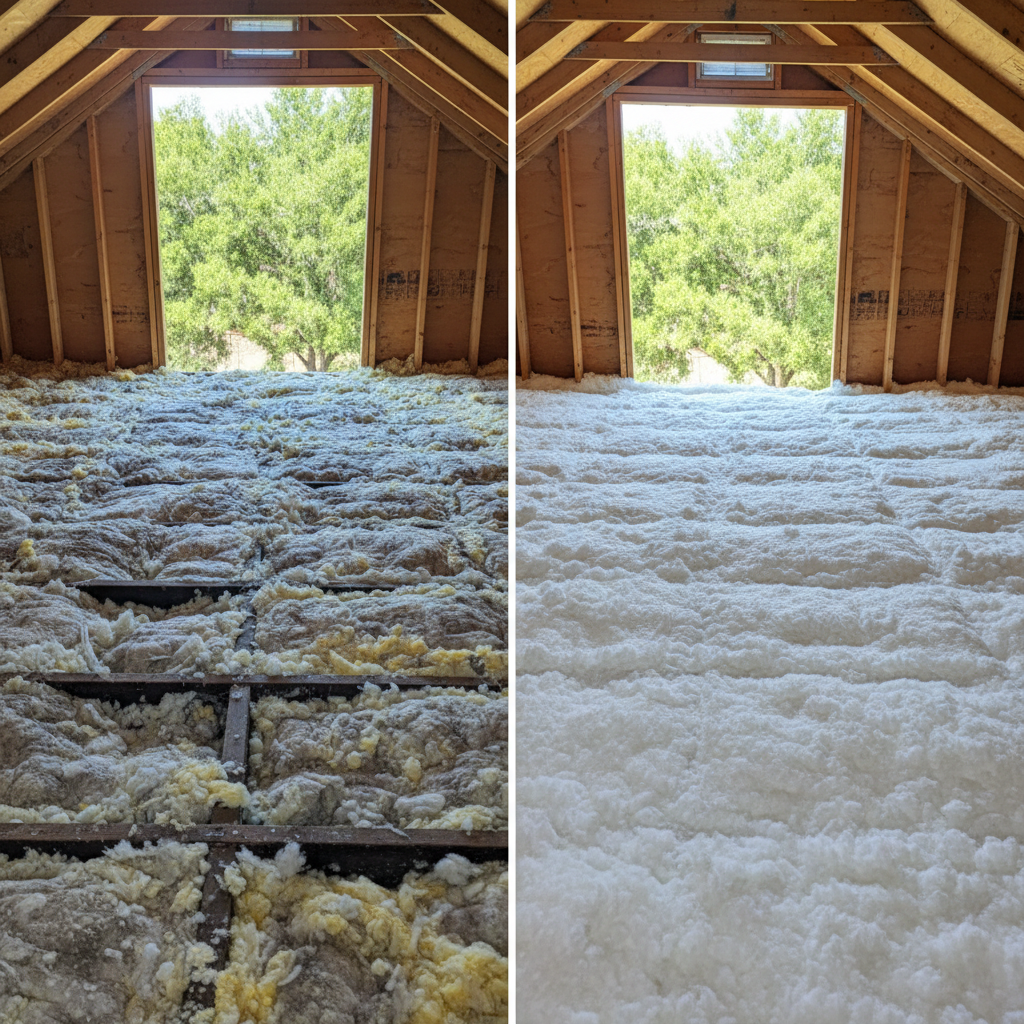
Alright, let's talk attic insulation. You're probably looking at your energy bills and thinking, 'there's got to be a better way.' And you're right, there usually is. When it comes to insulating your attic, especially around here in Seguin, two of the most common options I deal with are blown-in cellulose and blown-in fiberglass. Both are good, but they've got their own strengths and weaknesses. I'm going to lay it all out for you so you can make an informed decision for your place.
What's Blown-In Cellulose?
Cellulose insulation is made mostly from recycled paper products, like old newspapers. It's treated with fire retardants to make it safe, and then we blow it into your attic space. Think of it like a dense, fluffy blanket. It really fills in all those tiny nooks and crannies, which is a big plus.
What's Blown-In Fiberglass?
Fiberglass insulation, on the other hand, comes from tiny glass fibers. It's the stuff you usually see in batts, but for attics, we often blow it in loose. It's also fire-resistant and pretty common. It looks a bit like cotton candy, but trust me, don't eat it.
Cost: What's Your Wallet Saying?
Generally speaking, blown-in fiberglass tends to be a little less expensive upfront than blown-in cellulose. It's not usually a huge difference, but if you're on a tight budget, fiberglass might look more attractive initially. However, remember that the cheapest option isn't always the best value in the long run. You've got to consider how well it actually works too.
R-Value & Performance: Keeping the Heat Out (or In)
This is where things get interesting, especially with our Texas summers. R-value is how we measure insulation's ability to resist heat flow. The higher the R-value, the better it insulates. On a per-inch basis, cellulose usually has a slightly higher R-value than fiberglass. That means you might need a little less cellulose to get the same insulating power. But here's the kicker: cellulose is denser. That density helps it resist air movement better than fiberglass. And in a place like Seguin, where we get those scorching 100-degree days, stopping air movement is just as important as stopping heat conduction. Cellulose can sometimes perform better in extreme heat because it's so good at blocking air infiltration.
Durability & Maintenance: How Long Will It Last?
Both types of blown-in insulation are pretty durable. They're designed to last for decades, often for the lifetime of your home, without needing much maintenance. Neither one settles significantly if we install it correctly. One thing to watch out for with fiberglass is if it gets wet. It can lose its R-value when damp and takes a while to dry out. Cellulose, because it's organic, can be more susceptible to mold if it gets wet and stays wet, though the fire retardants help with pest resistance. But honestly, if your attic is getting wet, you've got bigger problems than just your insulation – you've got a roof leak that needs fixing, pronto.
Pest Resistance: Unwanted Guests
This is a common question I get. Cellulose is treated with borates, which are natural fire retardants but also act as a deterrent for pests like insects and rodents. They don't like to nest in it. Fiberglass, on the other hand, doesn't offer the same level of pest deterrence. While neither is a magic bullet against determined critters, cellulose definitely has an edge here. You don't want squirrels setting up shop in your attic, especially if you live in an older home down by the Guadalupe River where they're always looking for a cozy spot.
Moisture Management: Our Humid Climate
Fiberglass doesn't absorb moisture, which is a pro. If there's a leak, it won't hold onto water. However, it also doesn't release moisture well. Cellulose can absorb some moisture without losing its R-value immediately, and it can release it over time. This can be a benefit in our humid climate, helping to buffer moisture levels in the attic. But again, the best moisture management is a dry attic.
My Recommendation for Seguin Homeowners
Look, both are solid choices. You can't really go wrong with either if they're installed correctly to the right R-value. But if you're asking me, for most homes here in Seguin, I lean towards blown-in cellulose. Why? That density and air-sealing capability are huge when you're battling our intense summer heat. The slightly higher R-value per inch and the pest deterrence are just icing on the cake. It just feels like a more robust solution for keeping your home comfortable and your energy bills down in our specific climate.
Ultimately, the best choice for you depends on your budget and specific home needs. But if you're looking for maximum performance against the Texas elements, especially for heat transfer and air leakage, cellulose often comes out on top. Give Champion Insulation Company a call if you want to talk specifics about your attic; we're happy to come out and take a look.